
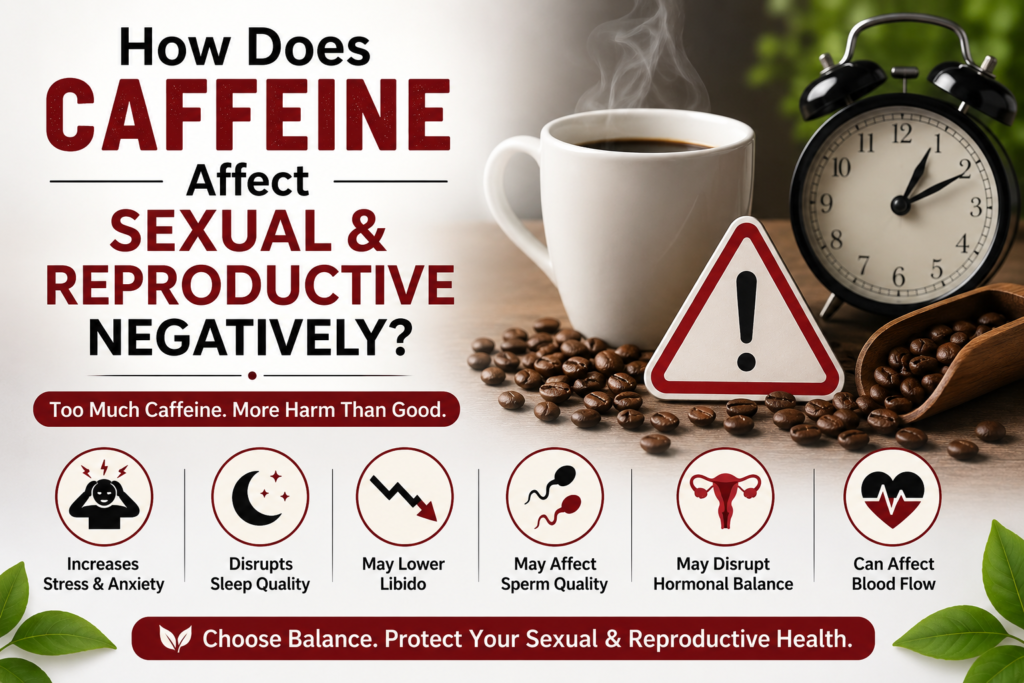
Caffeine is found in coffee, tea, energy drinks, cola, chocolate, and some supplements. Moderate consumption is tolerated well by many adults, but excessive intake can affect sleep, stress levels, digestion, and overall energy balance. Because these factors are connected with sexual and reproductive wellness, regularly consuming too much caffeine may indirectly create challenges. The effect varies from person to person and depends on quantity, timing, lifestyle, and overall health.






Sexual wellness is influenced by physical energy, mood, sleep, circulation, and hormonal health. High caffeine intake may temporarily increase alertness, but excessive consumption can contribute to restlessness, anxiety, or difficulty relaxing. When these effects become frequent, they may interfere with intimacy, sexual desire, or overall sexual well-being.
One of the clearest concerns with excessive caffeine is its effect on sleep. Caffeine can remain active in the body for several hours, particularly when consumed later in the day. Poor sleep may lead to tiredness, irritability, reduced concentration, and lower interest in intimacy. Therefore, reducing late-day caffeine can be a simple step toward better overall wellness.
Too much caffeine may make some people feel jittery or anxious. On-going stress can affect mood and general well-being and may also influence sexual desire. However, caffeine should not automatically be considered a direct cause of hormonal disorders. If someone experiences persistent changes in libido, menstrual cycles, fertility, or sexual function, proper medical evaluation is more appropriate than blaming caffeine alone.
Research on caffeine and male fertility has produced mixed findings, and moderate intake does not necessarily cause reproductive problems. However, heavily caffeinated drinks can sometimes accompany poor sleep, high sugar intake, smoking, or an unhealthy routine. These broader lifestyle factors can matter for reproductive wellness. Men experiencing on-going fertility or sexual concerns should seek appropriate professional assessment.
Women may also experience sleep disturbance, anxiety, digestive discomfort, or increased heart rate after consuming too much caffeine. During pregnancy, caffeine intake is generally recommended to be limited, so individual guidance from a healthcare professional is important. Menstrual or fertility concerns should likewise be evaluated according to their specific causes rather than attributed to caffeine without evidence.
From an Ayurvedic wellness perspective, excessive reliance on stimulating beverages may not support a balanced daily routine. A practical approach is to observe how caffeine affects sleep, digestion, energy, and mental calmness. Gradually reducing excessive intake, drinking enough water, eating nourishing meals, exercising regularly, and maintaining consistent sleep can support healthier habits. Personalized Ayurvedic guidance may complement these lifestyle measures, but it should not replace medical care when symptoms persist.
The appropriate amount varies according to individual circumstances. Instead of suddenly stopping caffeine, people who consume it heavily may prefer to reduce it gradually to avoid withdrawal symptoms such as headaches or fatigue. Pay particular attention to energy drinks and pre-workout products because their caffeine content can be substantial.
Caffeine is not inherently harmful to sexual or reproductive health, but excessive intake can become a concern when it disrupts sleep, increases stress, or contributes to an unhealthy routine. A balanced diet, regular activity, good sleep, and mindful caffeine consumption can provide a stronger foundation for wellness. For personalized Ayurvedic lifestyle guidance, Subhash Goyal can help individuals explore suitable wellness practices alongside appropriate healthcare.
Medical Disclaimer:
The information in this article is for educational purposes only and should not be considered medical advice. Always consult a qualified healthcare professional for advice about your individual health or medical condition.
Excessive caffeine may contribute indirectly through anxiety, poor sleep, or fatigue, although it is not considered a universal direct cause of low libido.
There is no simple conclusion that caffeine causes male infertility. Evidence is mixed, and other health and lifestyle factors should also be considered.
High intake may be relevant to certain reproductive circumstances, particularly pregnancy. Women should discuss appropriate intake with their healthcare professional.
Neither should be considered a sexual-health treatment. The important factor is overall caffeine intake and how the beverage fits into your diet and routine.
Yes. Consistently poor sleep can reduce energy and affect mood and interest in intimacy.
Not necessarily. Many people can consume moderate amounts without problems. If you consume large quantities, gradual reduction may be more comfortable.
An Ayurvedic practitioner can provide individualized lifestyle and dietary guidance, while persistent reproductive or sexual symptoms should receive appropriate medical evaluation.
© Subash Goyal 2021 | Designed & Maintained By Epic Web Service
