
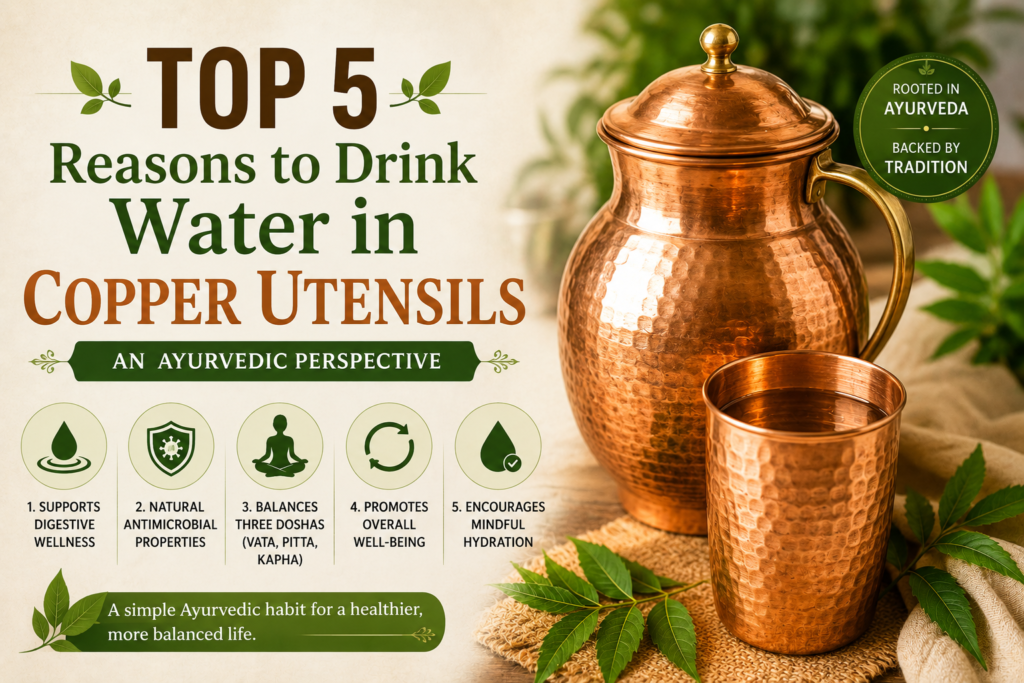
Water is essential for every aspect of life, and Ayurveda places great importance on proper hydration and mindful daily routines. Along with when and how we drink water, the traditional practice of storing water in a copper vessel has been followed in Indian households for generations. In Ayurveda, copper is traditionally regarded as a valuable metal with specific properties, and drinking water that has been stored in a copper vessel is commonly associated with the concept of Tamra Jal. While modern scientific research continues to investigate the potential effects of copper-containing water, this traditional practice should be understood within its Ayurvedic context.
Here are five reasons why drinking water stored in a copper utensil has traditionally been valued.


Ayurveda emphasizes Dinacharya, or daily routines designed to support balance and overall well-being. Drinking water stored in a clean copper vessel has traditionally been incorporated into morning routines. The idea is not simply about drinking water but about developing mindful habits that encourage consistency, cleanliness, and awareness of one’s daily health practices. For people following traditional Ayurvedic routines, copper-stored water may therefore be considered a simple addition to their daily lifestyle.
Ayurvedic traditions place considerable emphasis on Agni, commonly described as the digestive fire responsible for digestion and transformation of food. Copper has traditionally been associated with supporting digestive balance. Consequently, Tamra Jal is sometimes recommended within traditional Ayurvedic practices as part of a broader approach to maintaining digestive wellness. However, it is important not to interpret this traditional belief as evidence that copper water can treat digestive disorders. Persistent digestive symptoms should be evaluated by a qualified healthcare professional.
One interesting aspect of copper that has been studied scientifically is its antimicrobial activity. Copper surfaces can inactivate or reduce certain microorganisms under appropriate conditions. This property helps explain why copper has historically been used for vessels and other household purposes in different cultures. However, storing water in a copper vessel should not be treated as a substitute for safe drinking-water practices. Water should come from a reliable source, and copper vessels should be properly cleaned and maintained.
Ayurveda approaches wellness holistically rather than focusing on one isolated symptom. Traditional Ayurvedic literature discusses the relationship between diet, digestion, lifestyle, daily routines, and individual constitution. Within this framework, Tamra Jal is traditionally viewed as one small component of a healthy routine. It should ideally be considered alongside nutritious food, adequate hydration, sufficient sleep, physical activity, and other appropriate lifestyle practices. The practice is therefore more meaningful when incorporated into an overall balanced routine rather than viewed as a quick health remedy.
Perhaps one of the simplest benefits of the practice is that it can encourage people to pay greater attention to their daily water intake. Keeping a dedicated water vessel can make hydration part of a regular morning and daytime routine. Adequate water intake is important for normal body functions, although individual fluid requirements vary according to factors such as activity, climate, diet, and health status.
From an Ayurvedic perspective, mindful daily habits are an important part of maintaining wellness.
If you choose to follow this traditional practice, use a food-safe copper vessel and keep it clean. Water should not be stored in copper indefinitely. Avoid using copper vessels for acidic liquids such as lemon water, fruit juices, or vinegar-based drinks because acidic substances can react with copper. It is also important not to assume that more copper is better. Excessive copper exposure can be harmful. People with specific medical conditions or those advised to limit copper exposure should consult a healthcare professional before regularly consuming copper-stored water.
Drinking water stored in copper utensils is a traditional Ayurvedic practice that continues to attract interest today. From the Ayurvedic perspective, Tamra Jal is associated with daily routine, digestive wellness, balance, and mindful living. Modern research also recognizes copper’s antimicrobial properties, although this does not mean that copper water is a treatment for diseases. As Subhash Goyal emphasizes in a holistic approach to wellness, healthy living is best supported through consistent dietary and lifestyle habits. Copper-stored water can be considered a traditional practice, but it should be followed responsibly and alongside safe hydration practices and appropriate professional healthcare.
Medical Disclaimer:
The information in this article is for educational purposes only and should not be considered medical advice. Always consult a qualified healthcare professional for advice about your individual health or medical condition.
Tamra Jal refers to water traditionally stored in a copper vessel. It is a practice associated with Ayurvedic daily routines and is traditionally valued as part of a balanced lifestyle.
From an Ayurvedic perspective, copper-stored water is traditionally associated with digestive wellness, balance, and daily health routines. Scientific evidence for specific health benefits from drinking copper water remains limited.
Traditionally, water is often stored for several hours or overnight. There is no need to store it for excessively long periods, and the vessel should be cleaned regularly.
Ayurvedic traditions associate Tamra Jal with digestive wellness, but copper water should not be considered a treatment for indigestion or digestive disease. Ongoing symptoms require professional evaluation.
Not necessarily. Individual health circumstances matter, and excessive copper exposure can be harmful. Anyone with a relevant medical condition should seek professional advice before making it a regular practice.
It is better to avoid storing lemon water or other acidic beverages in copper vessels because acids can react with copper. Plain drinking water is the more appropriate choice for this traditional practice.
No. Copper-stored water should never replace prescribed medicines or professional medical treatment. It is best viewed as a traditional wellness practice rather than a cure for disease.
© Subash Goyal 2021 | Designed & Maintained By Epic Web Service
