
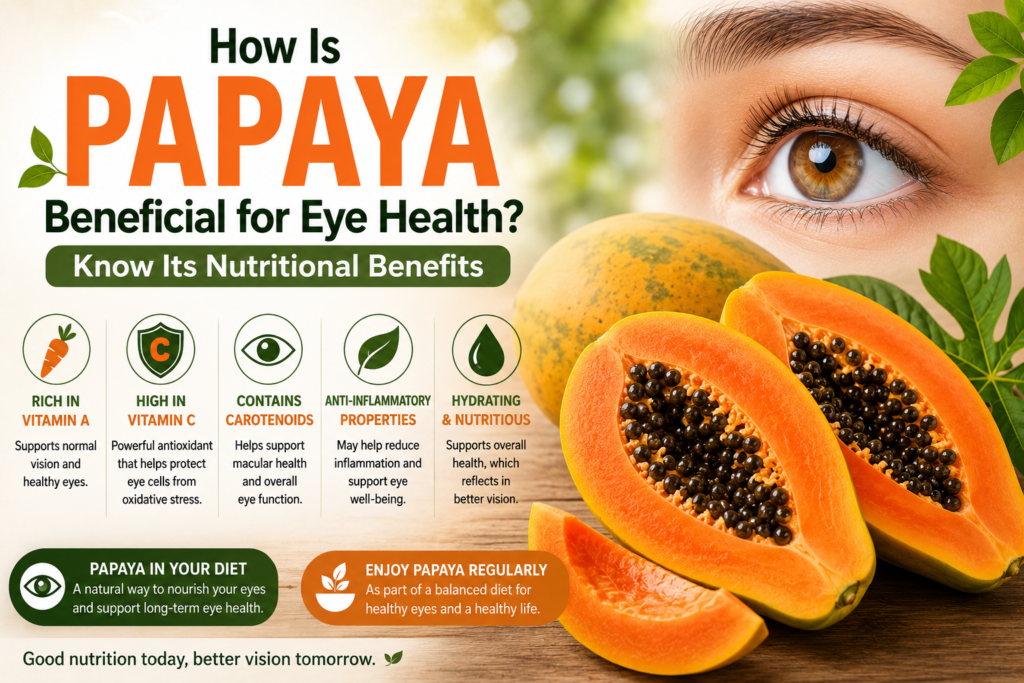
Papaya contains nutrients that can contribute to normal vision and general eye wellness. However, it is important to remember that no single fruit can prevent or cure every eye condition.
Vitamin A is an important nutrient for normal vision. It plays a role in the functioning of the retina and is particularly important for seeing in low-light conditions. Papaya contains carotenoids that can contribute to the body’s vitamin A supply. Including papaya as part of a varied diet can therefore help support nutritional needs associated with normal eye function.
Papaya is a good source of vitamin C, an antioxidant nutrient that helps protect cells from oxidative stress. Antioxidants are important because the body naturally produces oxidative molecules during normal metabolism. A diet containing a variety of fruits and vegetables can provide different antioxidants and nutrients that contribute to overall health, including eye wellness.
Papaya’s orange color comes partly from naturally occurring carotenoids. Some carotenoids can act as antioxidants, while others can be converted into vitamin A by the body. Eye health research also focuses on carotenoids such as lutein and zeaxanthin, which are concentrated in the macular region of the eye. Eating a variety of colorful fruits and vegetables can help contribute to a nutrient-rich diet.
Eye health is influenced by more than one food. Eating a balanced diet that includes fruits, vegetables, whole grains, nuts, seeds, and other nutrient-rich foods can help provide the body with a broad range of essential nutrients. Papaya can be enjoyed as a convenient snack or included in breakfast and fruit salads, making it an easy way to increase fruit variety in your daily diet.
Nutrition is only one part of maintaining healthy vision. Regular physical activity, avoiding smoking, managing conditions such as diabetes and high blood pressure, protecting the eyes from excessive ultraviolet exposure, and getting appropriate eye examinations are also important. Papaya can complement these habits but should not be considered a replacement for professional eye care.
Fresh papaya can be consumed on its own or combined with other healthy foods. You can add diced papaya to a fruit bowl, enjoy it with breakfast, or combine it with plain yogurt and other fruits. The key is variety and moderation. Instead of relying on one fruit for eye health, include different colorful fruits and vegetables in your regular diet.

Papaya should not be considered a treatment for cataracts, glaucoma, macular degeneration, or other eye diseases. While its nutrients can contribute to a healthy diet, existing eye conditions require appropriate evaluation and treatment from a qualified eye-care professional. If you experience persistent blurred vision, eye pain, sudden vision changes, flashes, or unusual floaters, seek professional medical attention promptly.
Papaya is a nutritious fruit that can contribute to a healthy diet and support overall wellness. Its vitamin A-related carotenoids, vitamin C, fibre and other nutrients make it a valuable addition to a varied eating pattern. According to Subhash Goyal, maintaining wellness involves making consistent, sensible choices rather than depending on a single food or remedy. Including papaya alongside other nutrient-rich foods, maintaining healthy lifestyle habits, and having regular eye examinations can all contribute to a responsible approach to eye health.