
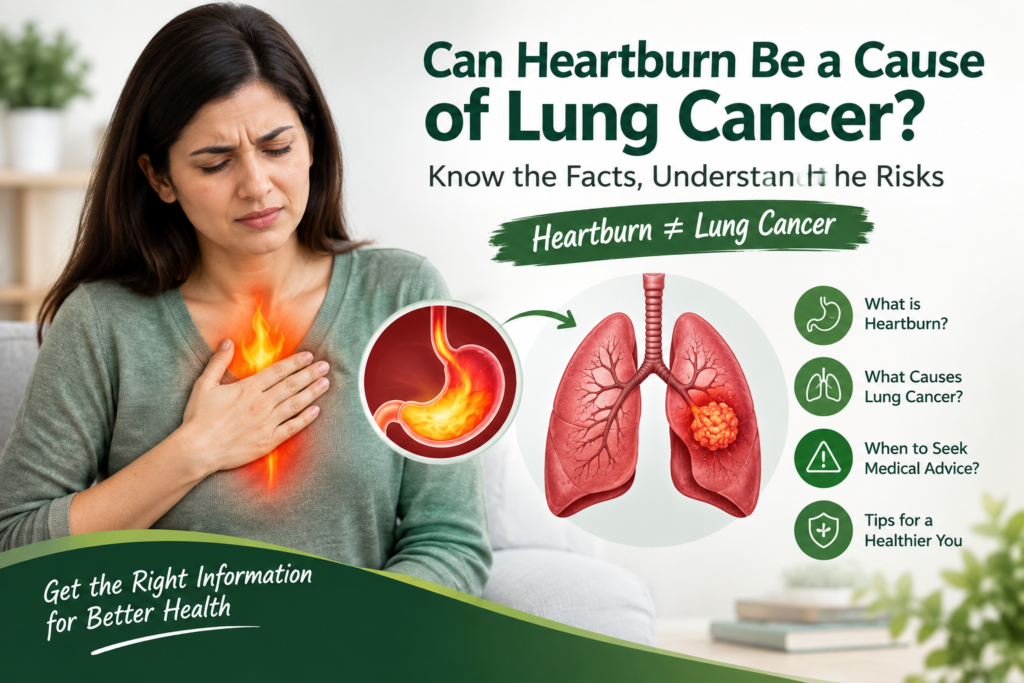
Heartburn occurs when stomach contents move backward into the esophagus, the tube connecting the mouth and stomach. This can create a burning feeling behind the breastbone or in the throat.
It may become worse after large meals, when lying down, or after consuming foods and drinks that trigger reflux.
Occasional heartburn is common. Frequent heartburn, however, may indicate GERD.
There is currently no established evidence that ordinary heartburn directly causes lung cancer.
The relationship between reflux and cancer is more closely associated with certain cancers of the esophagus and throat, rather than lung cancer. Research has found an association between GERD and increased risk of esophageal and laryngeal cancers.
This distinction is important because the lungs and esophagus are different organs and have different major risk factors.
Heartburn can sometimes feel like chest pain or pressure, which may make people concerned about their heart or lungs.
Acid reflux may also cause a sour taste, regurgitation, throat irritation, cough, or discomfort that becomes worse after meals or when lying down.
Because several conditions can cause chest discomfort, it is better not to diagnose the cause based on symptoms alone.
Smoking is the leading risk factor for lung cancer. Exposure to secondhand smoke, radon, asbestos, certain workplace chemicals, and air pollution can also contribute to risk. Family history and other factors may play a role as well.
Having a risk factor does not mean that a person will develop lung cancer, and lung cancer can also occur in people who have never smoked.
Cancer can sometimes produce symptoms involving the chest or digestive system, but heartburn by itself is not a typical way to identify lung cancer.
More commonly recognized symptoms of lung cancer include a persistent or worsening cough, coughing up blood, chest pain, hoarseness, and unexplained weight loss, shortness of breath, recurrent respiratory infections, or new wheezing.
These symptoms can also occur with conditions other than cancer, so proper medical evaluation is important.
If heartburn occurs frequently, keeps returning, becomes difficult to control, or is accompanied by difficulty swallowing, unexplained weight loss, persistent vomiting, or other concerning symptoms, speak with a healthcare professional.
Persistent heartburn may indicate GERD or another digestive condition that needs treatment. The National Cancer Institute also notes that heartburn or indigestion that does not go away can be a symptom requiring medical evaluation.
Depending on the individual, some lifestyle habits may help reduce reflux symptoms. These can include eating smaller meals, identifying personal food triggers, avoiding lying down soon after eating, maintaining a healthy weight, and avoiding tobacco.
People with frequent symptoms should discuss appropriate treatment with a healthcare professional rather than relying only on home remedies.

Can heartburn be a cause of lung cancer? No, heartburn is not an established cause of lung cancer.
Frequent heartburn is more commonly associated with acid reflux or GERD. Long-term GERD has been linked with certain cancers of the oesophagus and larynx, but that is different from saying that heartburn causes lung cancer.
If heartburn is persistent or accompanied by unusual symptoms, getting the cause checked is a sensible step. Early evaluation can help identify digestive problems and ensure that other health concerns are not overlooked.