
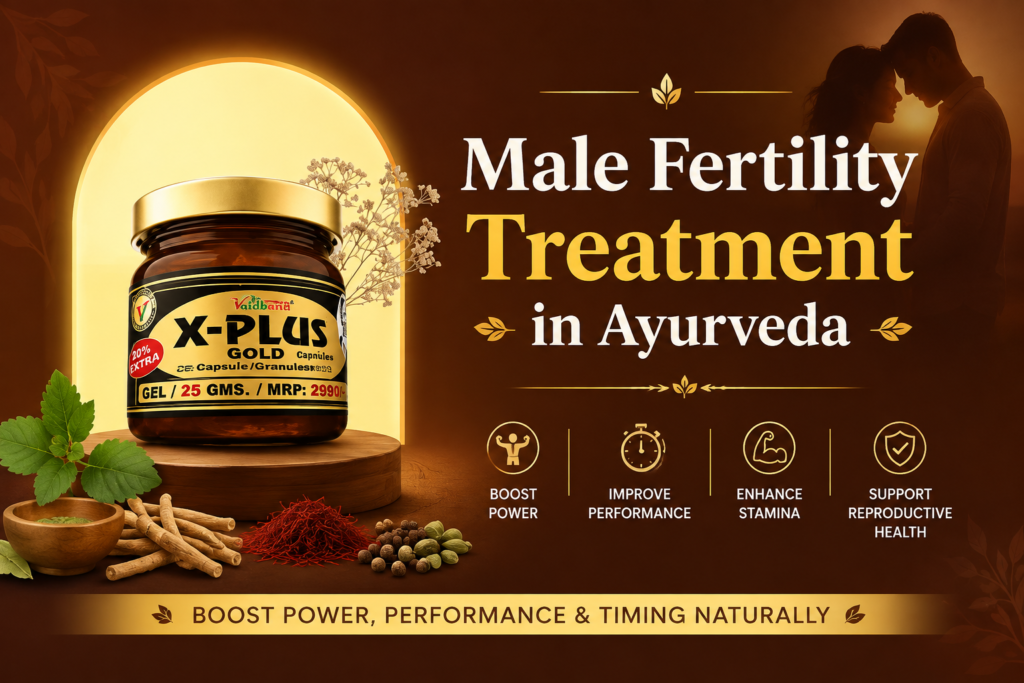
Ayurveda traditionally focuses on strengthening the body, improving nourishment, supporting vitality, and maintaining healthy reproductive function. In addition, stress management and proper sleep are given considerable importance because lifestyle factors may affect overall reproductive wellness.
Ashwagandha is one of the most commonly used Ayurvedic herbs for male wellness. Traditionally, it has been used as a Rasayana, or rejuvenating herb, and to support strength and vitality. Some research has also investigated its potential role in supporting sperm parameters and reproductive health. However, results can vary, and professional guidance is recommended.
Although Shatavari is often associated with women’s health, it has traditionally been used as a nourishing Ayurvedic herb. It may support general vitality and reproductive wellness when included appropriately in an individualized Ayurvedic approach.
Kapikacchu, also known as Mucuna pruriens, is traditionally valued for supporting vitality and reproductive health. Research has explored its potential effects on sperm quality and reproductive parameters. Nevertheless, it should be used under qualified guidance, especially when other medicines are being taken.
Gokshura is traditionally used in Ayurveda to support urinary and reproductive wellness. It may be included in certain formulations designed to promote male vitality. However, the suitability of Gokshura depends on an individual’s health condition and constitution.
Amla is valued in Ayurveda for its nutritional and antioxidant properties. Furthermore, a balanced diet containing fruits, vegetables, whole grains, nuts, seeds, adequate protein, and healthy fats can help provide nutrients needed for overall reproductive health.
Ayurvedic fertility care is not limited to herbs. Regular physical activity, sufficient sleep, stress management, maintaining a healthy weight, and avoiding tobacco and excessive alcohol can support general health and may benefit reproductive wellness. Additionally, excessive heat exposure around the testicles should be minimized because sperm production can be sensitive to elevated temperatures.

Male fertility concerns should not be ignored, particularly when pregnancy has not occurred after a year of regular unprotected intercourse, or sooner when there are known reproductive health concerns. A semen analysis and appropriate medical evaluation can help identify possible causes. Ayurvedic care can be considered as a complementary wellness approach, but it should not replace necessary medical diagnosis or treatment. Herbal products should also be selected carefully because quality, dosage, and interactions can vary.
Ayurveda approaches male fertility by supporting overall nourishment, vitality, reproductive health, and lifestyle balance. Herbs such as Ashwagandha, Kapikacchu, Gokshura, and Shatavari may traditionally be used as part of an individualized wellness plan. For personalized Ayurvedic guidance, Subhash Goyal emphasizes understanding the individual’s health and lifestyle before recommending an appropriate approach. A balanced diet, healthy routine, proper sleep, and professional evaluation can further support the journey toward better reproductive wellness.